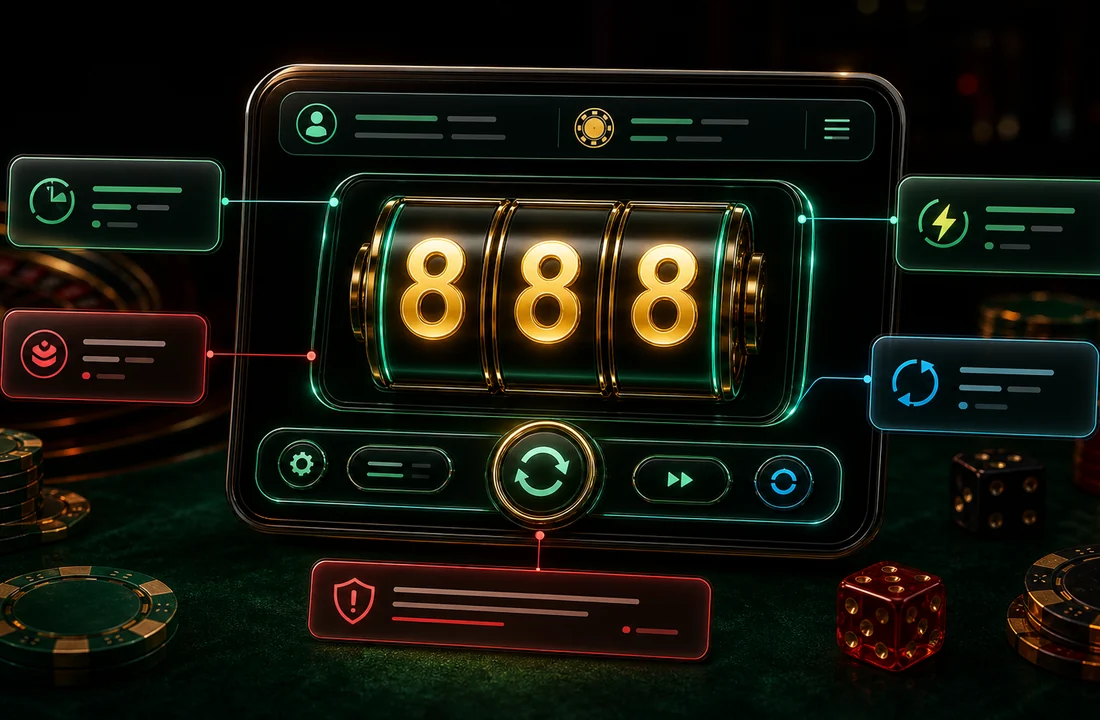
A screen can demand attention before you have had time to read it. A button may look ready, a timer area may be changing, and a phone prompt may appear while you are still deciding what the room means. A simple order helps you slow down and keep each check separate.
Use this sequence when reviewing a slot-style screen: start with the room label, read the timer area, inspect the button state, and then review any phone prompt. Finish by checking the login message and adult caution. The order is useful because it gives you context before you respond to a bright control or a short message.
Start with the room label
Do not begin with the most noticeable button. First, look for the room label and read it without rushing. The label gives you the first piece of context for the screen you are viewing. If it is unclear, partly hidden, or difficult to distinguish from other text, pause before continuing.
- Find the room label.
- Read the full label once.
- Check whether it matches the room you intended to review.
- If you cannot tell what the label says, stop and do not treat the screen as ready for action.
Keep this check separate from the appearance of the reels or other visual effects. A glowing screen can look active, but the appearance alone does not prove access, safety, or any result. The label is a reading task, not a reason to act.
Read the timer area before the button
After the room label, look at the timer area. The purpose of this step is to notice timing information before a control or message creates pressure. You do not need to guess what a timer means. Simply check whether the timing information is clear enough for you to understand the screen.
Ask yourself:
- Can you identify the timer area?
- Can you read its current message or state?
- Does the timing information feel clear, or are you being pushed to respond before you have read it?
- Would pausing give you enough time to understand the rest of the screen?
If the timing information is unclear, step away from the screen rather than trying to predict what will happen next. A short pause is also useful when the screen changes while you are reading. You can return to the same order instead of following the fastest visual movement.
Inspect the button state without tapping
Only after checking the room label and timer area should you inspect the button state. Look at the control and decide what the screen appears to be showing, but do not assume that its colour, size, or movement proves that it is safe or suitable to use.
- Look at the button state without touching it.
- Check whether the control appears clear or unclear.
- Compare its position with the room label and timer area.
- Pause if the button draws attention away from a warning message or phone prompt.
This is a visual check, not a promise about a round or outcome. Bright effects and 888 reels may make a room feel active, yet they do not establish access, safety, or a result. If the control seems to invite immediate action while other information remains unread, keep the screen still and continue reading.
Review the phone prompt last
Phone prompts deserve a separate check because they can appear briefly and may ask for information or permission. Read the prompt fully before responding. Do not let the button state or timer area decide for you.
Use this order for a phone prompt:
- Read the whole prompt.
- Identify what the prompt is asking you to do.
- Check whether the request is clear and relevant to the screen you were reviewing.
- Do not share private details with strangers.
- Stop if the prompt asks you to move money, share an OTP code, or continue under pressure.
A prompt that is hard to read should not be treated as an instruction. If the words disappear quickly, wait and review what is visible before making a decision. You can also leave the screen alone when the request does not make sense in relation to the room label, timer area, or button state.
Keep login messages separate from phone prompts
A phone prompt and a login message are not the same check. A login message may refer to a number, password, OTP, or session. Read the message and consider whether you understand it, but do not share private details with strangers or continue simply because the screen appears urgent.
For a login message, use a slower pass:
- Read whether the message concerns a number, password, OTP, or session.
- Check whether the wording is understandable.
- Look for any warning message before doing anything else.
- Pause if the request is unclear or creates pressure.
- Do not treat a successful-looking screen as proof of a safe result.
This site provides screen checks and safety reminders. It does not run paid games, take payments, handle cash-out requests, or promise results. If a screen asks you to move money or disclose an OTP code, slow down and check where the prompt came from.
A hypothetical order check
Consider a clearly marked hypothetical example using Object A and Object B. Object A is the room label you can read. Object B is the button state that appears bright while a timer area is changing. You begin with Object A, then read the timer area, and only then inspect Object B. A phone prompt appears before you have finished reading.
Following the order, you do not tap the button. You read the prompt, decide whether it is clear, and stop if it requests private information or creates pressure. This example does not show what any real screen will contain. It demonstrates only how to keep the checks in sequence when several visual elements compete for attention.
When the order should end in a pause
The check is complete when you understand what you have read, not when a screen makes you feel rushed. Pause when the room label is unclear, the timer area cannot be understood, the button state distracts from a warning, or a phone prompt asks for private details. Do not continue merely to avoid missing a changing message.
Adults in India can use this order when comparing mobile game screens, but it has limits. It cannot prove that a screen is safe, confirm access, predict an outcome, or verify an unknown request. It is a reading method for visible screen information. If the display remains unclear after a pause, step away.
Related screen checks
For another page about checking controls and phone messages before acting, read Slot Button State and Phone Prompt Checks for India. For notes about reviewing a login screen, read Yono888Slots Login Screen Safety Checks for India Users.
Adult caution
Adults only. Visual effects, room activity, timer changes, and button states do not prove a result. Do not share private details with strangers. If a screen asks for payment, money movement, an OTP code, or action under pressure, stop and review the request before doing anything further.
Responsible play reminder
This article is informational only. It does not provide account service, payment handling, outcome prediction, or any guaranteed result. Adults should check local rules and keep play recreational.